








Japan officially reinforced its casino policy on March 27, 2026, as the cabinet led by Sanae Takaichi approved the Fifth Tourism Nation Promotion Basic Plan, consolidating the development of integrated resorts under a tightly controlled legal framework that combines strict regulation with selective market expansion.
The plan, developed by the Japan Tourism Agency under the Ministry of Land, Infrastructure, Transport and Tourism, reaffirms that casinos will only be permitted within integrated resorts under the Act on Development of Specified Integrated Resort Districts, while general gambling remains prohibited under Japan’s Penal Code.

The shift is operational rather than legislative. Japan is moving from regulatory design to execution, maintaining a strict cap of three IR licenses nationwide under direct state supervision.
The only approved project to date, the MGM Osaka IR, led by MGM Resorts International and Orix Corporation, represents an investment of ¥1.51 trillion (≈US$9.45 billion) and is scheduled to open by the end of 2030.
- Japan sets May 2027 restart for casino IR bidding as Osaka’s MGM-scale blueprint comes into focus
Momentum is now expanding beyond Osaka. On April 1, 2026, Aichi Prefecture —led by Governor Hideaki Omura— formally launched a Request for Proposal (RFP) to develop a new integrated resort on an artificial island near Chubu Centrair International Airport (Tokoname, Nagoya region), marking the first concrete move ahead of the next licensing phase.
- Aichi revives Japan IR casino bid as 2027 licensing window nears
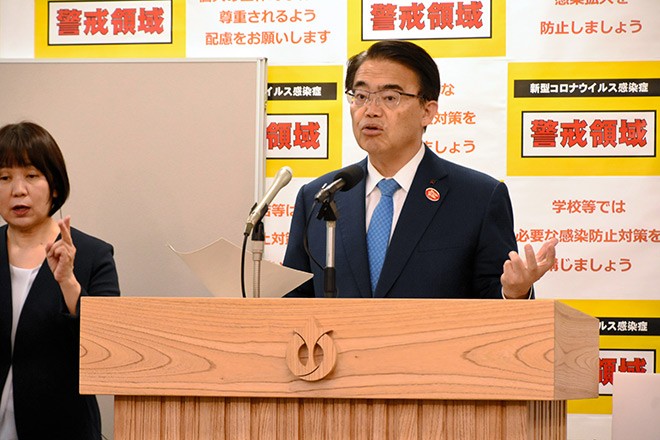
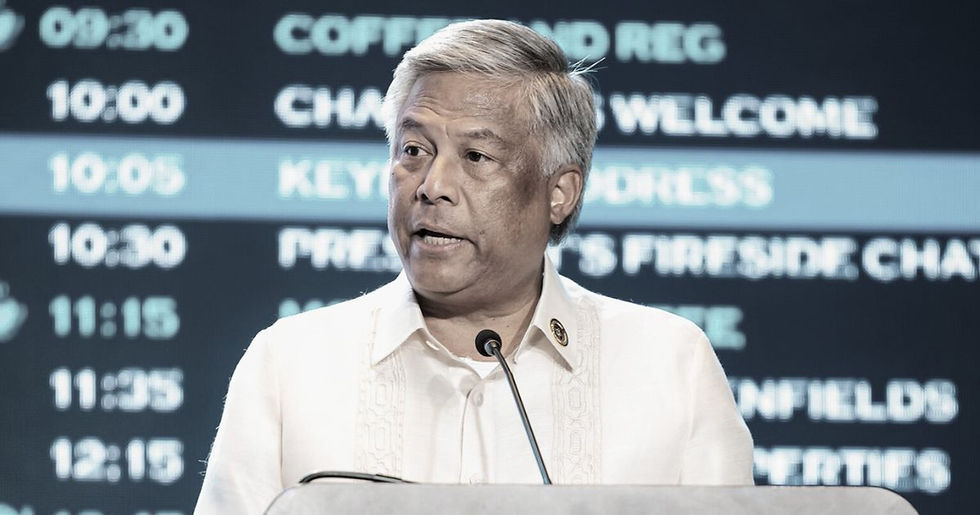
Governor Hideaki Omura
Interested operators must submit initial proposals by July 31, 2026, with evaluation and partner selection expected between late 2026 and spring 2027. The project envisions a 50-hectare resort, including over 60,000 sqm of MICE space, hotels, entertainment facilities, and a casino limited to just 3% of total floor area, reinforcing Japan’s containment model.
This expansion aligns with a cabinet order issued on March 10, 2026, which sets the next national licensing window from May 6 to November 5, 2027, when up to two additional IR licenses may be awarded.
The economic strategy is explicit: casinos are not a standalone industry but a tool to drive tourism, foreign investment, and high-value MICE activity. At the same time, Japan continues to enforce a strict ban on online gambling — illegal under domestic law — in a market estimated at ¥1.24 trillion annually (≈US$8 billion) in offshore betting.
The result is a hybrid model taking shape: controlled physical expansion paired with strict digital prohibition. With Aichi entering the race, Japan is no longer designing its casino market — it is actively deploying it under a system defined by scarcity, capital intensity, and full state control.