


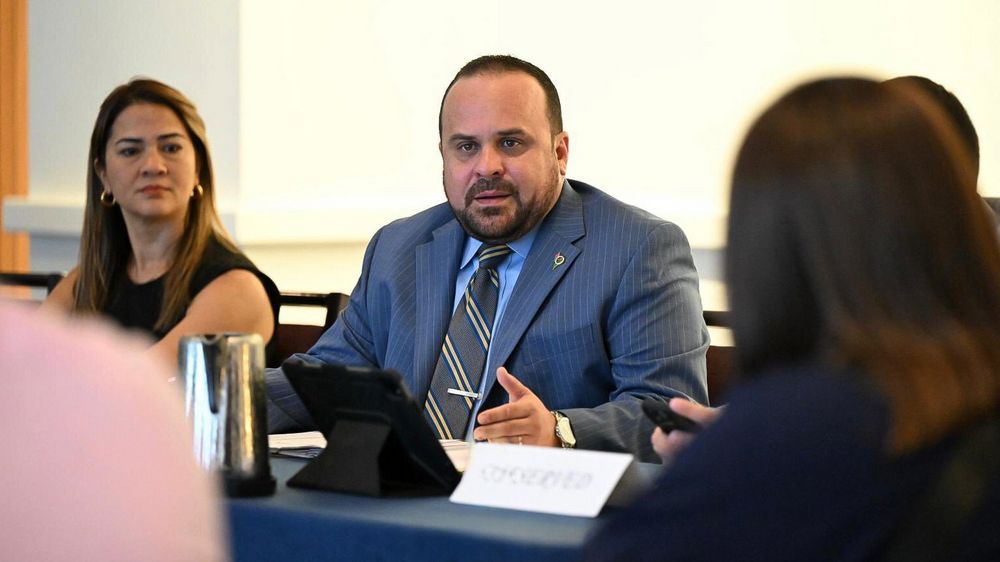




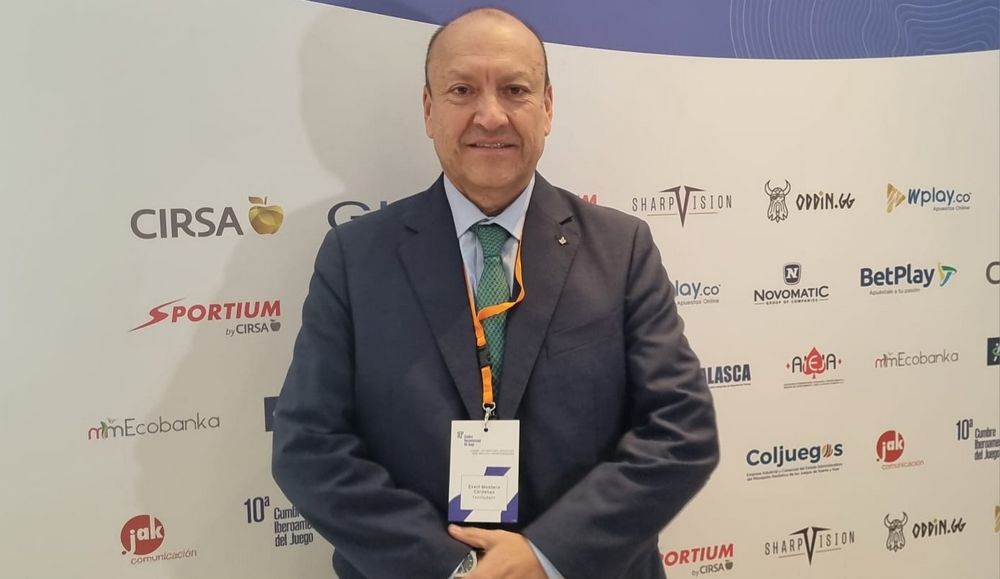
One of the most influential voices in the Latin American gaming industry today is Evert Montero Cárdenas, president of Fecoljuegos and the Federación Iberoamericana de Juegos de Azar (FIJA). His growing relevance reflects the strategic role both organizations now play across Latin America as governments tighten tax policies, expand AML oversight and increase pressure on illegal online gambling platforms operating across borders.

Montero’s comments come at a pivotal moment for the regional gaming market. Colombia remains one of Latin America’s most developed regulated gambling jurisdictions under the supervision of Coljuegos, while countries including Peru, Brazil, Chile and Mexico continue debating new regulatory frameworks, tax models and digital enforcement mechanisms. At the center of those discussions is a common concern: how to preserve the competitiveness of licensed operators while illegal offshore platforms continue capturing users through payment gateways, social media traffic and weak cross-border enforcement.
In an exclusive interview with Mundo Video during the 10th Ibero-American Gaming Summit in Bogotá, Montero argued that the real battle against illegal gambling in Latin America must move beyond website blocking and focus directly on disrupting financial flows linked to illegal operators.
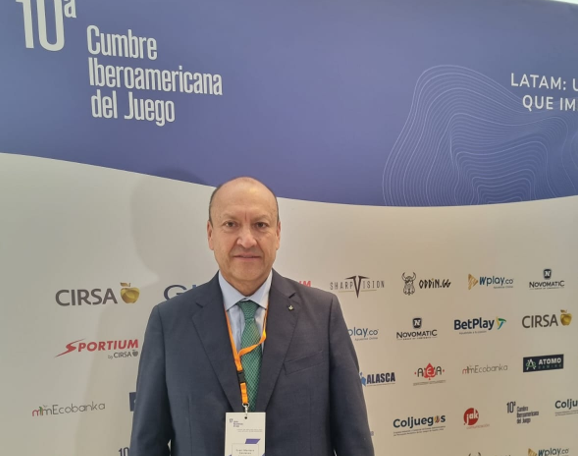
Q: Fecoljuegos has repeatedly warned that higher tax pressure could push the sector toward illegal platforms. What concrete measures does the industry need to protect legal operations and avoid migration?
A: The concrete measures are very clear. First, there should not be excessive overregulation, because that ultimately creates obstacles for companies to develop their activity. Second, there must be a tax burden that truly aligns with the operation, the technical structure, the business model and its mathematical model, and not simply tax burdens driven more by political than technical perspectives.
Of course, much stronger measures are also needed against illegal gambling. All this together can help improve conditions for competitiveness. We are not an anti-tax sector; we are a pro-tax sector, but taxes must be technical, well-established and clear, respecting the long-term financial sustainability of companies as well as their legal and financial stability.
Q: Regarding the 19% tax on online gaming, a debate emerged between operational sustainability and tax collection. What has been the real impact on operators, users and transfers allocated to healthcare?
A: Our activity is volume-driven in online betting. Any point that moves within the equation affects it significantly. When taxes are imposed that are not aligned with the activity, the impact is obviously strong.
Gaming will not disappear; what happens instead is migration toward illegality. Whenever there are no competitive conditions that allow legal operators to compete properly, users will move toward illegal platforms.
Q: In the fight against the illegal market, financial control seems increasingly important. How is Fecoljuegos working with banks, regulators and supervisory entities to block money flows toward illegal platforms?
A: We have informed banks, Asobancaria, compliance officer committees and different financial entities about the major risks surrounding these illegal capital flows.
One issue that concerns us greatly is how these flows are managed through payment platforms and gateways where virtually no control exists. That is where illegality should truly be attacked, because what really impacts illegal operators is blocking their financial flows.
Blocking websites is an important effort by the regulator, but it is not sufficient and does not generate a truly forceful structural impact. If financial flows through payment gateways were blocked, the measures would be far more effective.
Q: How are stakeholders working together to protect regulated and legal operators?
A: We constantly make proposals not only to the regulator, but also to public policy decision-makers regarding this activity, so that measures can be adopted allowing this industry to remain competitive.
We have requested broader regulation and a greater possibility of gaming offerings because illegal operators can ultimately offer every type of game, while regulated operators can only offer those specifically authorized.
We have also insisted on reviewing the tax burden so that it is aligned with the activity, strengthening the fight against illegality and continuing to work on responsible gaming. We provide guarantees so that this activity develops without harming players, the state or regulators, while also generating more resources for Colombia’s healthcare system. But this can only be achieved under appropriate industry conditions.
Q: Finally, what objectives do Fecoljuegos have at this summit and what does it expect from the event?
A: Whenever we attend these events, we seek to deliver a message of unity and joint work. Regulators from several countries are present here and, through FIJA, the Ibero-American Federation of Games of Chance, which I preside over, we have proposed three fundamental pillars: responsible gaming, fighting illegality and strengthening regulatory knowledge among countries.
One would hope that a summit like this produces initiatives with enough support to take concrete action regarding these issues affecting the entire region. What happens in one country ultimately impacts others.
If an operator is illegal in one region, it should not be allowed to operate legally in other markets belonging to these associations or regions. We also want a better understanding of the business model and how the activity functions, so that regulation exists, but regulation based on technical foundations.

Montero’s remarks arrive as Latin America faces rising tax pressure, rapid growth of illegal online platforms and new discussions around financial surveillance, payment blocking, AML compliance and digital enforcement. His role within Fecoljuegos and FIJA continues positioning him as one of the gaming sector’s main interlocutors between regulators, operators, banks and policymakers across the region.