














On April 7, 2026, it was disclosed that on April 2, 2026, Lithuania’s Ministry of Finance, led by Kristupas Vaitiekūnas, introduced a reform to the Law on Gambling (Lietuvos Respublikos azartinių lošimų įstatymas, Law No. IX-325) that will require all players to use a mandatory player identification card starting January 1, 2029, while progressively eliminating cash and centralizing market oversight.

The initiative, which builds on Law No. XIV-3080 of 2024, aims to record all deposits and winnings, track player behavior and strengthen responsible gambling mechanisms. The system will be supervised by the Gambling Supervisory Authority (Lošimų priežiūros tarnyba), under the Ministry of Finance and headed by Virginijus Daukšys, which will gain expanded powers starting May 2027.
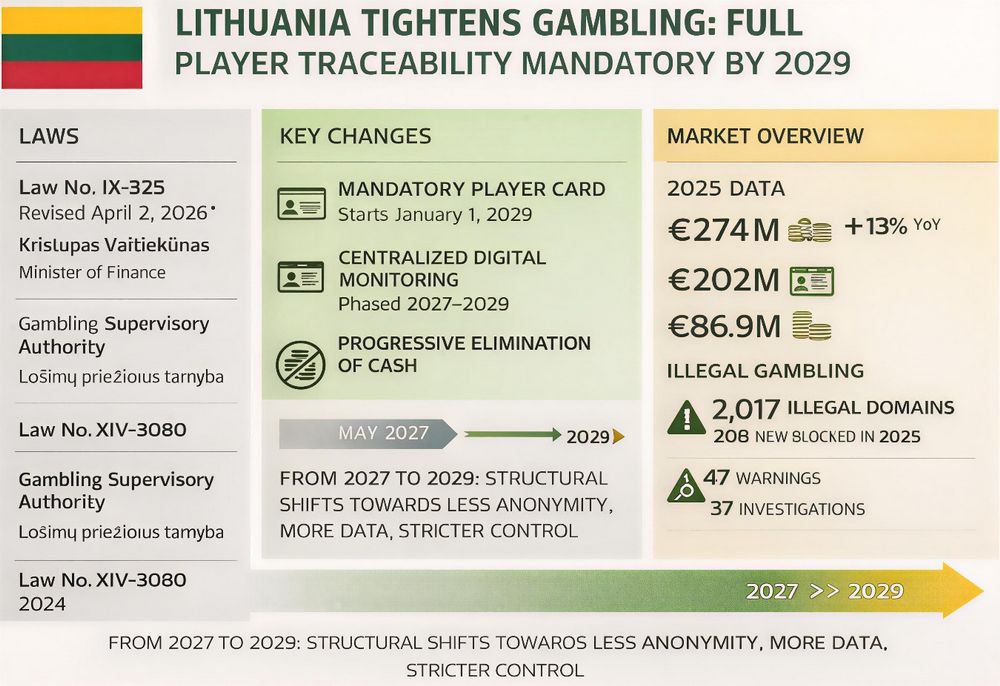
Market fundamentals explain the regulatory shift. In 2025, the sector generated €274.1 million in gross revenue, up 13% year-on-year, driven primarily by online gambling, which reached €202.4 million, compared with €71.7 million from land-based operations. The state collected €86.9 million in taxes, reinforcing gambling as a relevant fiscal contributor.
However, enforcement gaps remain. The regulator identified 2,017 illegal domains, after adding 208 new ones in 2025, and issued 47 warnings while launching 37 investigations into unauthorized activity. This environment has pushed the government to prioritize traceability, financial control and reduced anonymity.

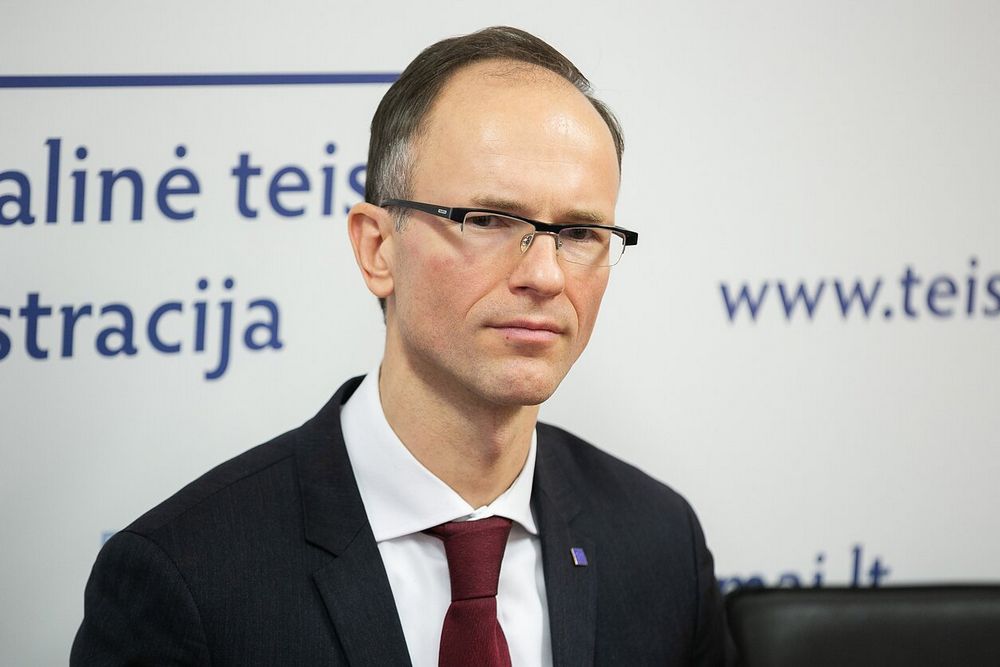
Gambling Supervisory Authority - Virginijus Daukšys
For operators, the shift is structural. Mandatory integration of identity systems, cashless payments and centralized monitoring increases technological and operational costs, while raising barriers to entry and favoring larger, well-capitalized players. For the state, the reform enhances oversight, reduces money laundering risks and strengthens tax collection.
Lithuania’s gambling market is entering a new phase: less anonymity, more data and greater state intervention. The outcome points to a more controlled and professionalized sector, but with the risk of pushing part of demand toward unregulated channels if the legal experience becomes overly restrictive.