













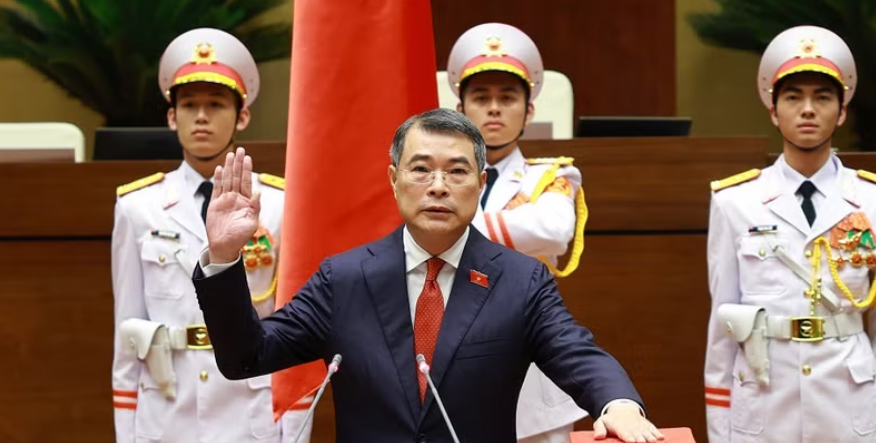
Vietnam is entering a new political cycle with direct implications for its economy and regulated industries such as gambling. On April 7, 2026, the National Assembly elected Le Minh Hung as prime minister for the 2026–2031 term with unanimous support from 495 deputies, while To Lam consolidated power as both president and general secretary of the Communist Party of Vietnam. At the same time, National Assembly chairman Tran Thanh Man appointed Nguyen Huu Nghia as State Auditor General, calling for stronger public budget oversight, early-stage auditing and the use of technology and artificial intelligence.

The signal is clear: technocracy, fiscal discipline and digital transformation are now central pillars of governance. Hung set an ambitious target of over 10% average annual GDP growth between 2026 and 2031, driven by innovation, digitalization and administrative efficiency. Economic conditions underline the urgency: Vietnam’s GDP grew 7.83% in Q1 2026, with exports reaching $122.93 billion and a $3.64 billion trade deficit, while inflation rose to 4.65%. The 2026 state budget projects revenues of VND2.53 quadrillion, expenditures of VND3.16 quadrillion and a deficit equivalent to 4.2% of GDP.

Within this framework, the gambling sector emerges as a strategic—though still underdeveloped—asset. Governed by Decree 03/2017/ND-CP (casinos) and Decree 06/2017/ND-CP (betting), the market remains tightly controlled by the Ministry of Finance, led by Nguyen Van Thang. Vietnam currently operates nine casinos, but only three—Phu Quoc, Ho Tram and Van Don—allow limited access for local players under Resolution 8/2025/NQ-CP, subject to strict financial eligibility requirements.
The sector has generated approximately $950 million in cumulative revenue through 2025 (approximate, extending recent trends) and around $490 million in fiscal contributions, positioning it as a relevant component of Vietnam’s premium tourism strategy. With a target of 25 million international visitors in 2026, gambling is expected to play a supporting role in driving high-value tourism.
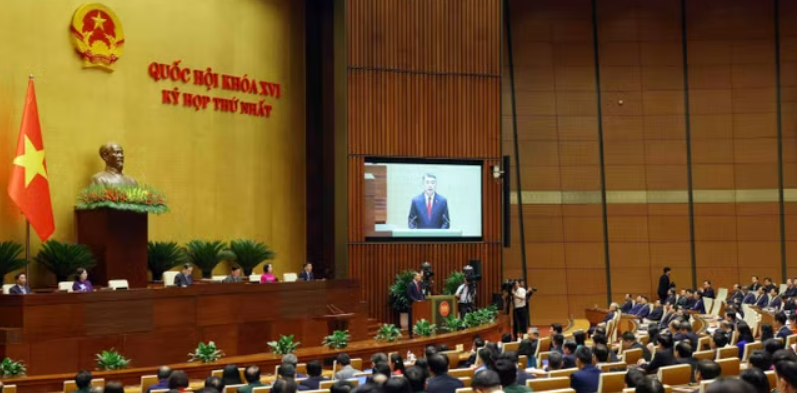
The government is already reviewing casino and betting regulations, including potential tax adjustments and digital oversight mechanisms. The direction is twofold: tighter supervision and traceability, alongside a controlled expansion—particularly in integrated resorts and potentially digital environments.
For the sector, the new cycle does not signal rapid liberalization but rather state-controlled growth. As Vietnam prioritizes digital governance and fiscal oversight, gambling is likely to evolve into a more traceable—and possibly partially digital—sector, but within a restrictive regulatory framework.
Vietnam is not opening its gambling market; it is positioning it as a controlled economic and fiscal instrument within its next phase of growth.