







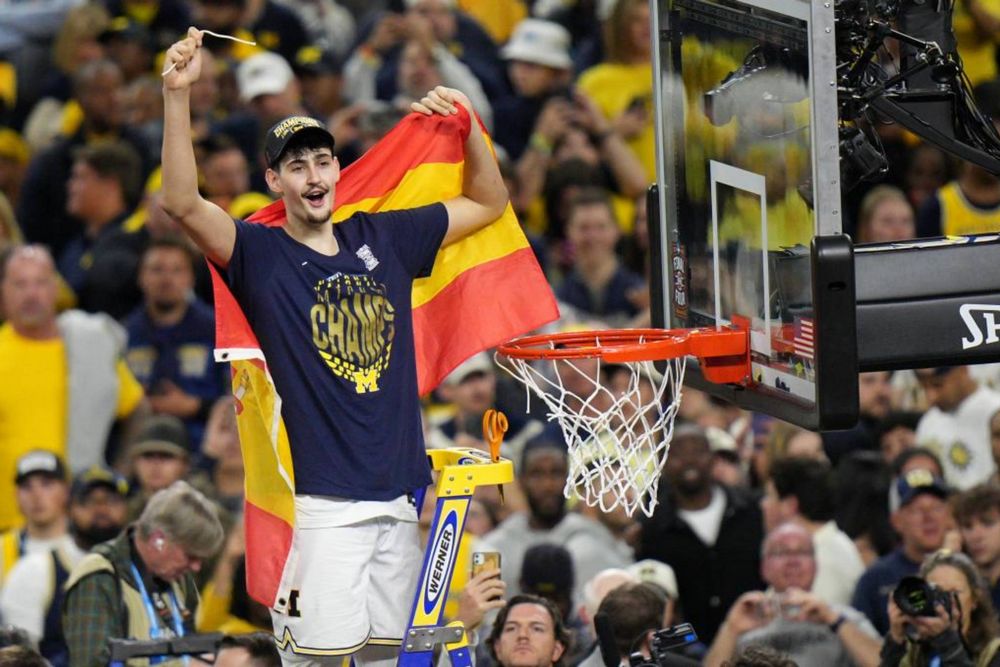
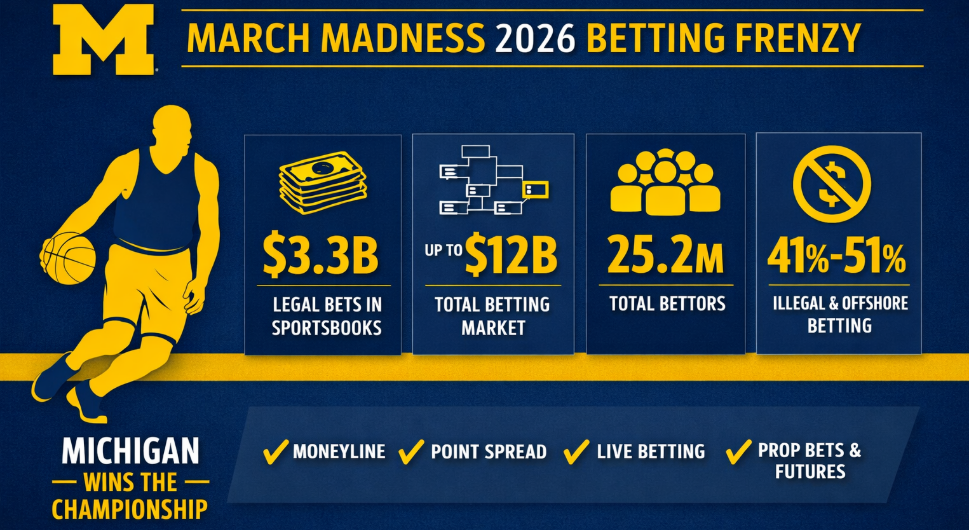
Michigan’s victory over UConn on April 6, 2026, did more than decide the NCAA champion—it confirmed March Madness as the most bet-on sporting event in the United States, with $3.3 billion wagered legally and up to $12 billion in total when including illegal markets, brackets and alternative platforms.

The betting boom is driven by scale and digital adoption. Legal handle rose 6% year-over-year, extending growth of more than 50% over three years, fueled by mobile wagering and the dominance of operators such as FanDuel, DraftKings, BetMGM, Caesars and bet365. The tournament drew 25.2 million bettors in regulated platforms, with tens of millions more participating through informal pools.
The championship game marked the peak of betting activity. With Michigan closing as a -285 to -320 favorite, the final generated up to $260 million in legal wagers at the upper end of estimates, driven primarily by live betting, now the industry’s main revenue engine. Betting formats included Moneyline, point spread, totals (over/under), prop bets, futures and live betting, with real-time wagering capturing the highest engagement.
Geographically, New York led the market with more than $2 billion wagered in February 2026 alone, followed by New Jersey, Illinois, Pennsylvania and Nevada, all benefiting from mature regulation and high mobile penetration.
Yet the most critical figure lies outside the system. Between 41% and 51% of total betting volume occurred in unregulated channels, with projections pushing that share to nearly 72% in 2026, highlighting significant leakage in tax revenue and oversight.
At the same time, new players are reshaping the landscape. Kalshi operated as a federally regulated derivatives exchange, offering binary contracts on game outcomes with roughly $395,000 per game on average, while facing restrictions and legal disputes in states such as New Jersey, Nevada, Illinois, Maryland and Ohio. Meanwhile, Polymarket provided global, crypto-based prediction markets accessible indirectly from the U.S., expanding betting activity beyond regulatory reach.
The tournament’s close underscores a structural shift: the U.S. betting market is no longer a single regulated ecosystem but a fragmented network spanning licensed sportsbooks, financial prediction markets and offshore crypto platforms—where growth is accelerating, but control over capital flows is increasingly contested.