

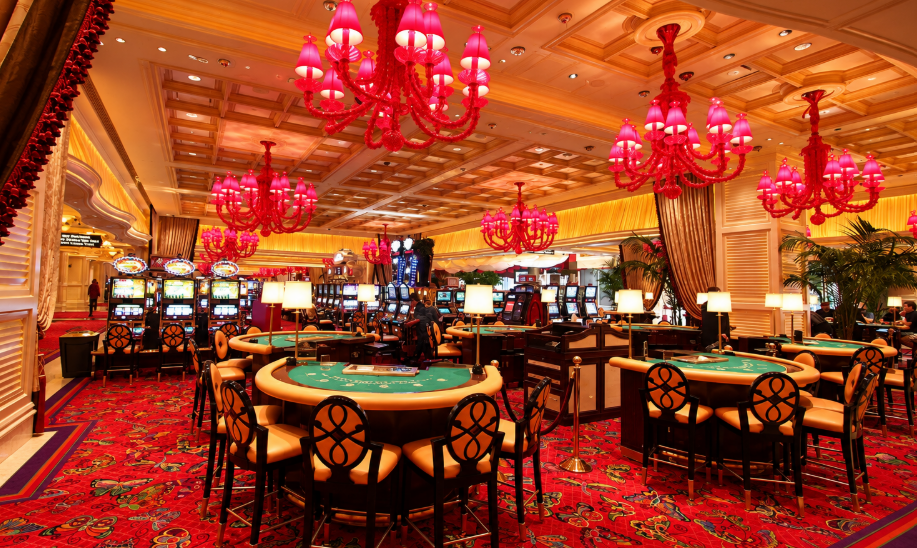


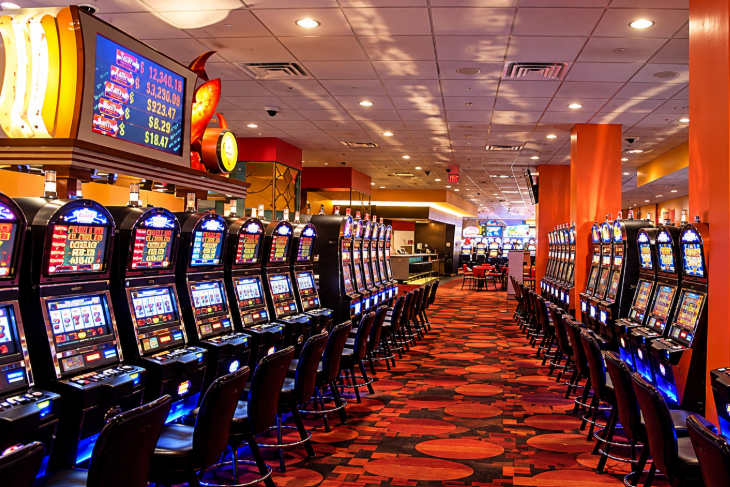


Land-based casinos in Rhode Island and Maryland, October 2026: both markets reported declines of around 4%, with pressure concentrated in slots, VLTs and physical table games. Rhode Island posted US$55.1 million in August, down 4% year over year, while Maryland closed the third quarter of 2026 with US$469.29 million, down 3.7% from US$487.47 million a year earlier.


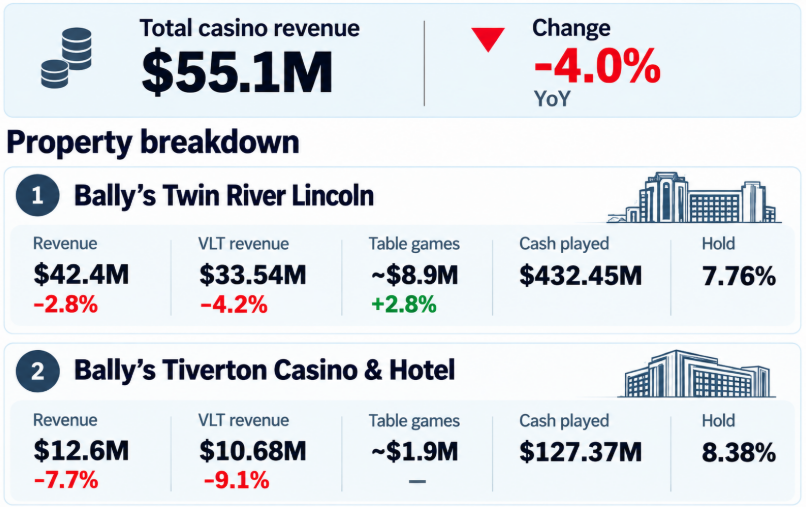
In Rhode Island, the state’s two casinos, both operated by Bally’s, accounted for all activity. Bally’s Twin River Lincoln generated approximately US$42.4 million, down 2.8%, including US$33.54 million from VLTs, down 4.2%, and about US$8.9 million from table games, up 2.8%. Bally’s Tiverton Casino & Hotel produced around US$12.6 million, down 7.7%, including US$10.68 million from VLTs, down 9.1%, and roughly US$1.9 million from tables. Lincoln processed US$432.45 million in cash played, with a 7.76% hold; Tiverton handled US$127.37 million, with an 8.38% hold.
The Rhode Island Lottery, led by Mark A. Furcolo under the Department of Revenue headed by Jane Cole, oversees the market. The contrast came from digital gaming: sports betting and iGaming handled around US$174.4 million in August, up 13%, while iGaming generated approximately US$6.6 million in revenue, up 36.5%.

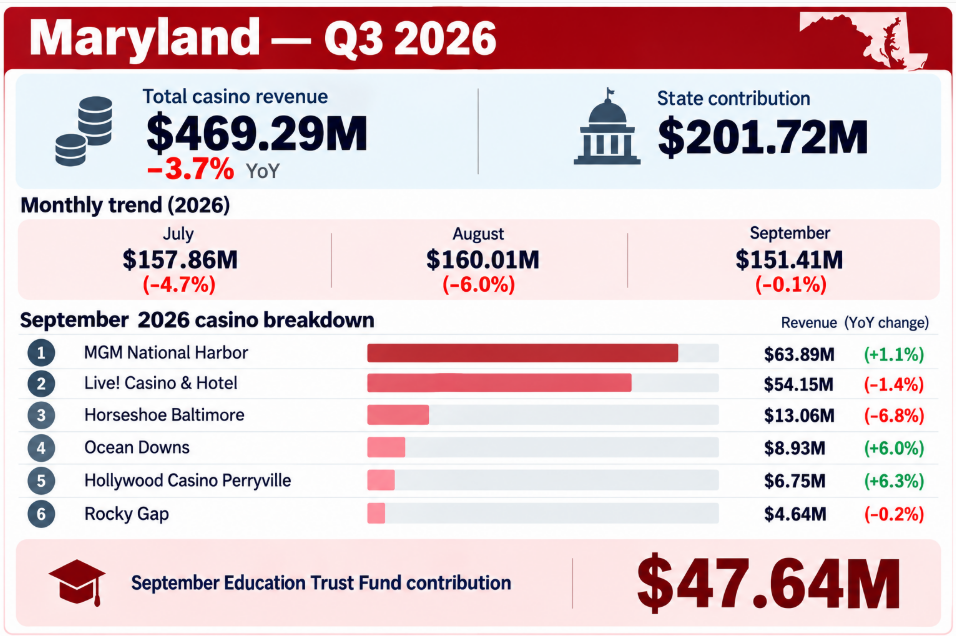
Maryland showed a broader quarterly decline. July produced US$157.86 million, down 4.7%; August, US$160.01 million, down 6%; and September, US$151.41 million, down 0.1%. In September, MGM National Harbor led with US$63.89 million, up 1.1%; Live! Casino & Hotel, US$54.15 million, down 1.4%; Horseshoe Baltimore, US$13.06 million, down 6.8%; Ocean Downs, US$8.93 million, up 6%; Hollywood Casino Perryville, US$6.75 million, up 6.3%; and Rocky Gap, US$4.64 million, down 0.2%.

The Maryland Lottery and Gaming Control Agency is currently led on an acting basis by Jeremy P. Baker. During the quarter, casinos contributed US$201.72 million to the state, while September alone directed US$47.64 million to the Education Trust Fund.