












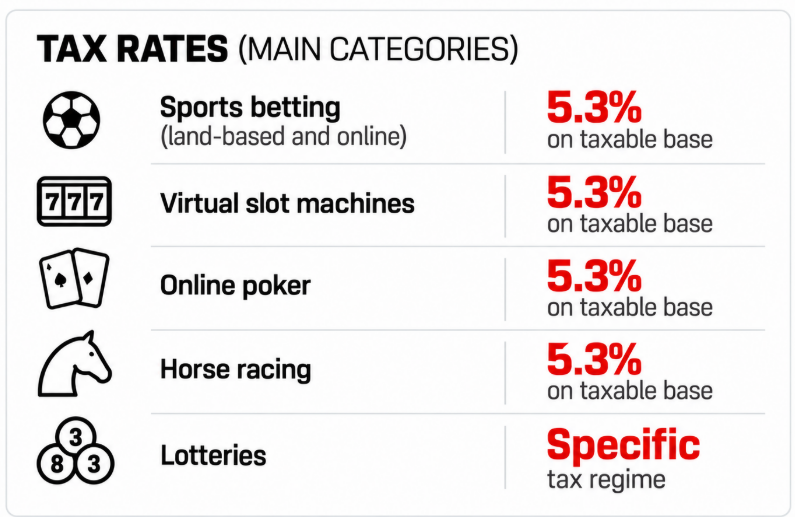

Vilnius, November 12, 2026. Lithuania’s Ministry of Finance has proposed raising the marginal tax rate on gross gaming revenue (GGR) to as much as 36% and increasing the lottery tax from 18% to 20%. The proposal, registered on November 11, is scheduled to take effect on July 1, 2027, subject to legislative approval.

The progressive structure establishes a 22% tax on the first €3 million in GGR, 29% on the portion between €3 million and €5 million, and 36% exclusively on revenue exceeding €5 million. Operators would make quarterly advance payments and reconcile their tax obligations against annual revenue. Lotteries would be taxed quarterly on their separate taxable base.

Tomas Tomilinas
The initiative follows a political agreement reached on November 5 among representatives of the governing coalition. Tomas Tomilinas, Chairman of the Seimas Committee on Social Affairs and Labour, estimated additional tax revenue of €36 million, while other projections suggest €34 million. Neither figure represents guaranteed fiscal revenue.

Mindaugas Sinkevičius
Finance Minister Taurimas Valys leads the ministry sponsoring the reform, while Prime Minister Mindaugas Sinkevičius heads the government. The proposal will be submitted to the Cabinet alongside the revised 2027–2029 budget before parliamentary examination by the Seimas. Virginijus Daukšys heads the Gambling Supervisory Authority (LPT), responsible for overseeing licences and operators.
According to the Ministry of Finance, residents lost €274 million through gambling in 2025, compared with €242 million in 2024. Gambling tax revenue reached €60.3 million, up from €48 million. The country currently has 28 land-based and remote gambling licences. Separately, on June 17, the government approved a proposal introducing mandatory player cards and eliminating cash transactions, with implementation planned for January 2029. A general gambling advertising ban is scheduled for January 1, 2028, following restrictions introduced in July 2025. Active self-exclusion requests currently stand at approximately 22,000. These regulatory reforms remain legally separate from the proposed tax legislation.