
















The battle to legalize sports betting in Georgia has become one of the most aggressive political and financial gaming campaigns in the United States in 2026. Operators, lobbying groups and allied political committees are already mobilizing nearly USD 10 million to finally open one of the largest untapped sports betting markets in the country, while state lawmakers prepare a renewed regulatory push for 2027.

At the center of the effort is the House Bill 910 — Georgia Lottery Game of Sports Betting Act, introduced by Representative Matt Hatchett, a proposal designed to legalize mobile sports betting under the supervision of the Georgia Lottery Corporation. The legislative strategy is crucial, because instead of directly amending the state constitution, the bill attempts to classify sports betting as a lottery-administered product, potentially avoiding a statewide referendum and allowing approval through a simple legislative majority and the signature of Governor Brian Kemp.
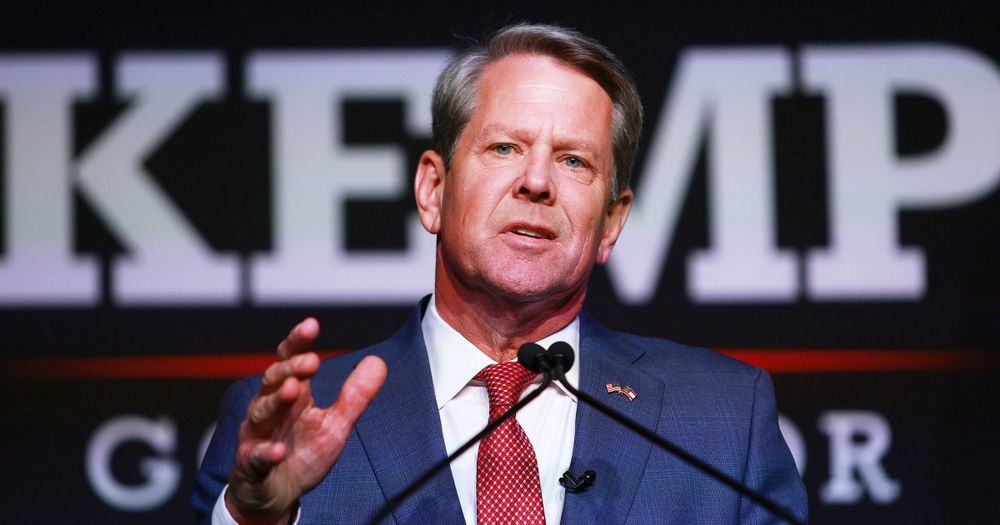
Governor Brian Kemp
Major national operators including DraftKings, FanDuel and BetMGM are linked to the broader legalization push, alongside political action committees and business sectors tied to Atlanta’s professional sports ecosystem. The goal is to capture a market with more than 11 million residents, a strong sports culture and one of the country’s largest informal and offshore betting environments.
The proposed model would authorize multiple online licenses and establish a tax rate of approximately 25% on sportsbook revenues, directing funds toward education programs, HOPE scholarships and pre-K initiatives under the same structure historically used by the state lottery system created in 1992. Regulatory oversight would fall to the Georgia Lottery Corporation, currently responsible for lottery administration and educational funding transfers.

Georgia still prohibits sports betting, commercial casinos and iGaming, but political pressure continues to intensify. In 2024, the Senate had already advanced proposals such as SR 579 and SB 386, although the House ultimately blocked the legislation due to political disagreements and conservative opposition.

The sector is now attempting to reshape the gaming landscape across the southern United States. If Georgia approves sports betting in 2027, the state could quickly become one of the country’s largest regulated betting markets, attracting operators, technology investment, sports sponsorships and new tax revenue streams for public education.