














New Zealand has published the final regulations that will activate the online casino licensing process on July 3, 2026, under the new Online Casino Gambling Act 2026, which was approved by Parliament in April. The move marks the formal transition from a market largely served by offshore operators to a regulated framework featuring strict advertising controls, player protection measures and direct government oversight.

Implementation is being led by Minister of Internal Affairs Brooke van Velden, while the regulator will be the Department of Internal Affairs (DIA), headed by Paul James, Secretary for Internal Affairs and Chief Executive. The DIA will oversee licensing, enforcement, regulatory investigations, AML/KYC compliance and responsible gambling obligations.
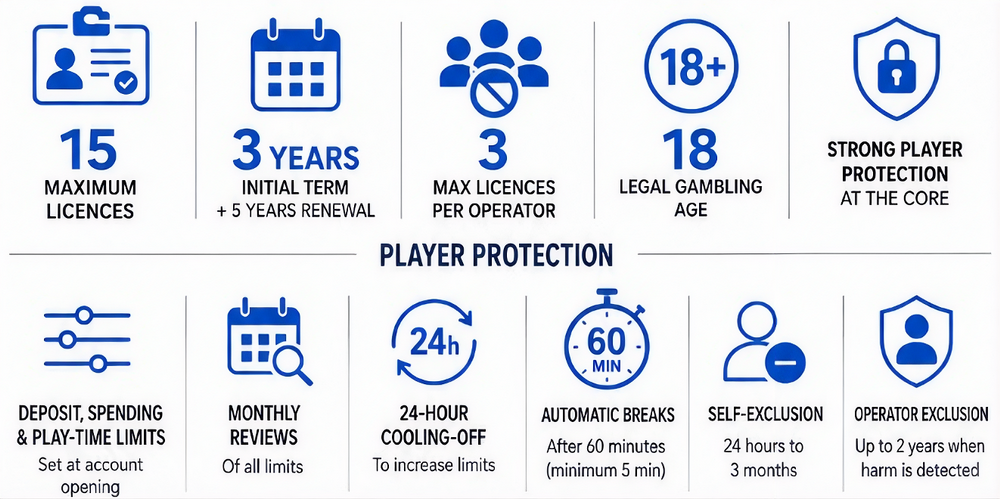
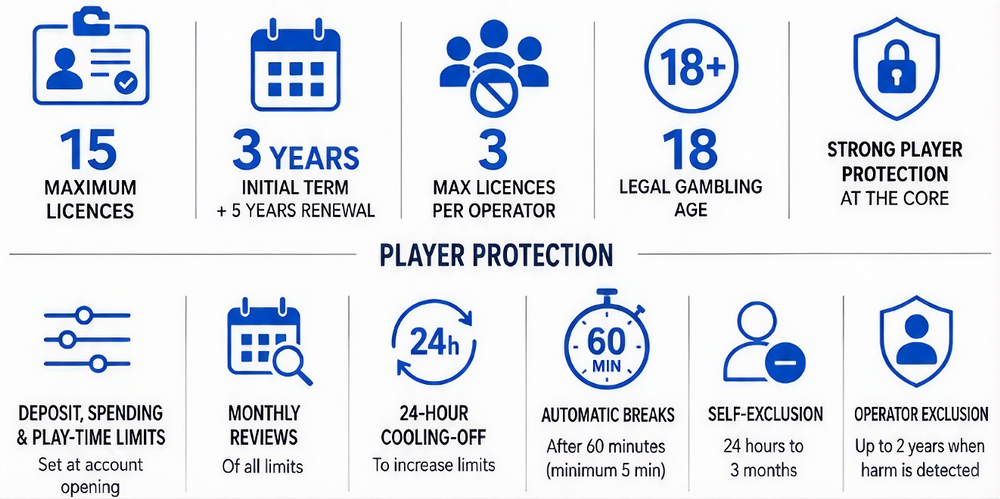
The legislation authorizes a maximum of 15 online casino licenses, to be awarded through a competitive process. Expressions of interest will open on July 3, 2026, followed by an auction scheduled for September 2026 and formal applications in October 2026. Each license will be valid for an initial three-year term, renewable for an additional five years, and no operator will be allowed to control more than three licenses.

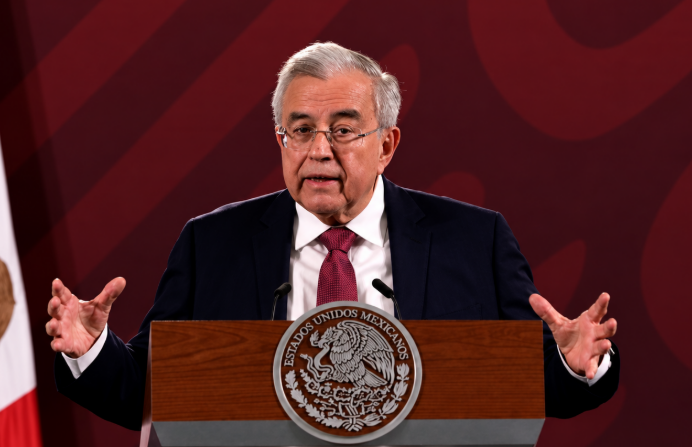
Brooke van Velden
The newly published regulations introduce some of the strictest player protection measures in the regulated gambling industry. All operators must require customers to set deposit, spending and play-time limits when opening an account. These limits must be reviewed monthly, and any request to increase them will be subject to a mandatory 24-hour cooling-off period.

(DIA) Paul James
The framework also requires automatic breaks after 60 consecutive minutes of play, including a minimum five-minute interruption, as well as voluntary self-exclusion tools, cooling-off periods ranging from 24 hours to three months, and systems designed to identify harmful gambling behavior. Operators will have the authority to exclude players for up to two years when signs of gambling-related harm are detected.
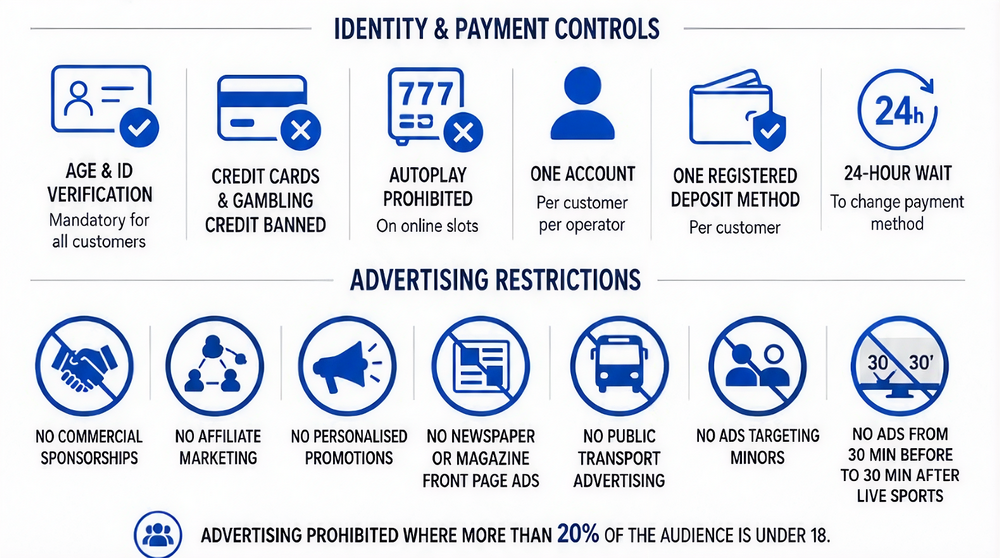
Identity and payment controls are equally strict. All customers must complete age and identity verification before gambling. The legal gambling age will be 18 years old. Credit cards, gambling-related credit products and autoplay features on online slot games are prohibited. Each customer will be limited to one account per operator and a single registered deposit method, with any change subject to a 24-hour waiting period.
Advertising restrictions represent one of the most aggressive elements of the reform. Commercial sponsorships, affiliate marketing, personalized promotions designed to increase spending, advertisements on newspaper and magazine front pages, public transport advertising and campaigns targeting minors are prohibited.
Advertising is also banned where more than 20% of the audience is under 18 years old. In addition, online casino advertising will be prohibited from 30 minutes before until 30 minutes after living televised sporting events.

The new rules also require quarterly and annual regulatory reporting, mandatory notification of serious incidents to the DIA within five working days, and payment of a quarterly levy equal to 3.5% of online gambling profits, in addition to existing tax obligations. The government estimates that New Zealand residents spend approximately NZ$1.3 billion (US$790 million) annually on online casino gambling, with much of that activity currently taking place through unregulated offshore operators. From December 2026, only operators that have successfully progressed through the licensing process will be permitted to continue serving New Zealand customers while the fully regulated market is prepared for launch in 2027.