










Costa Rica has once again placed a major gambling reform at the center of its legislative agenda to modernize the country’s betting sector and combat the rapid growth of illegal online gambling. The proposal, identified as bill 25.600, seeks to modernize the Junta de Protección Social and transform it into the country’s main gambling regulatory and supervisory authority.

The initiative was introduced by congresswoman Esmeralda Britton, former president of the JPS, and proposes a complete restructuring of Costa Rica’s betting, lottery and digital gaming market. The central objective of the reform is to close the legal vacuum that for years allowed offshore betting operations and online gambling platforms to function with limited oversight while illegal operators captured funds originally intended for social programs and public health.
Costa Rica currently lacks a comprehensive local online gambling licensing system. The JPS oversees state lotteries and certain authorized games, but many international gaming companies operate from the country through corporate structures without a fully regulated gambling framework comparable to other Latin American jurisdictions.
The reform proposes transforming the JPS into Costa Rica’s sole gambling regulatory authority while introducing a much stricter oversight framework for both land-based and online gambling operations. The bill would implement geoblocking measures against illegal gambling platforms, require stronger identity verification systems for players and establish real-time technical monitoring across licensed operators.
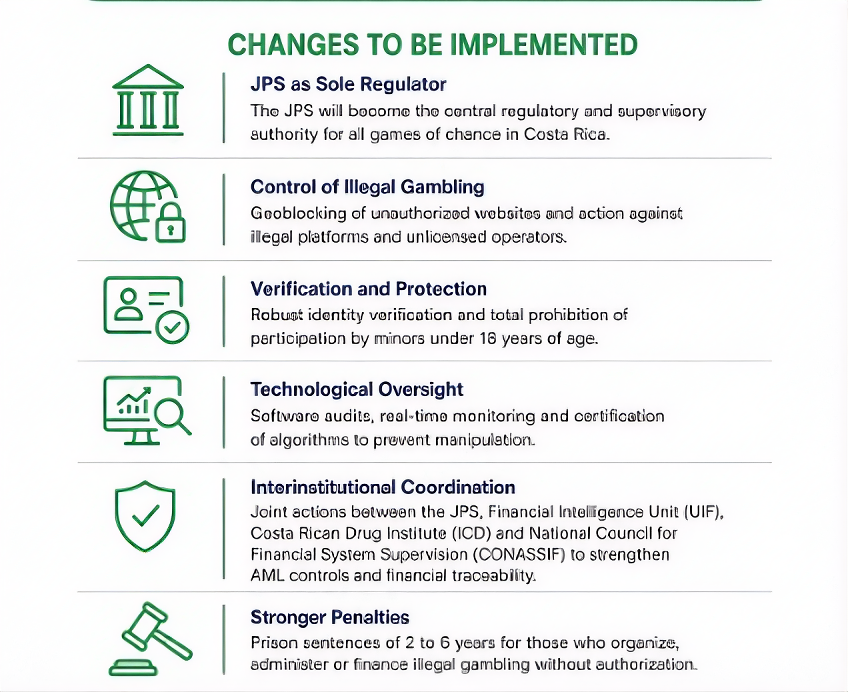
It also includes mandatory certification of gaming software and algorithms to prevent manipulation and strengthen transparency standards. In addition, the proposal reinforces AML/KYC controls, prohibits gambling access for minors under 18 years old and establishes prison sentences ranging from two to six years for individuals or organizations operating illegal gambling activities without authorization. The bill would also require coordination between the JPS, the Financial Intelligence Unit, the Costa Rican Drug Institute and the National Council for Financial System Supervision.

According to data cited in the proposal, the illegal market represents approximately 53% of the sector, generating losses close to CRC297 billion, equivalent to roughly US$647 million, resources that should finance social programs, healthcare, elderly care and vulnerable populations.
The legislative push follows the collapse of bill 25.057, a previous gambling reform proposal initially approved by the Security and Narcotics Commission in 2025 but later rejected in 2026.

In 2026, the JPS remains under state supervision while Costa Rica’s Ministry of Finance continues coordinating tax and financial oversight across the betting ecosystem. If approved, the reform could move Costa Rica closer to regulatory models already seen in Colombia and Brazil, centered on centralized oversight, technological supervision, financial traceability and tougher enforcement against illegal and offshore gambling operators.