


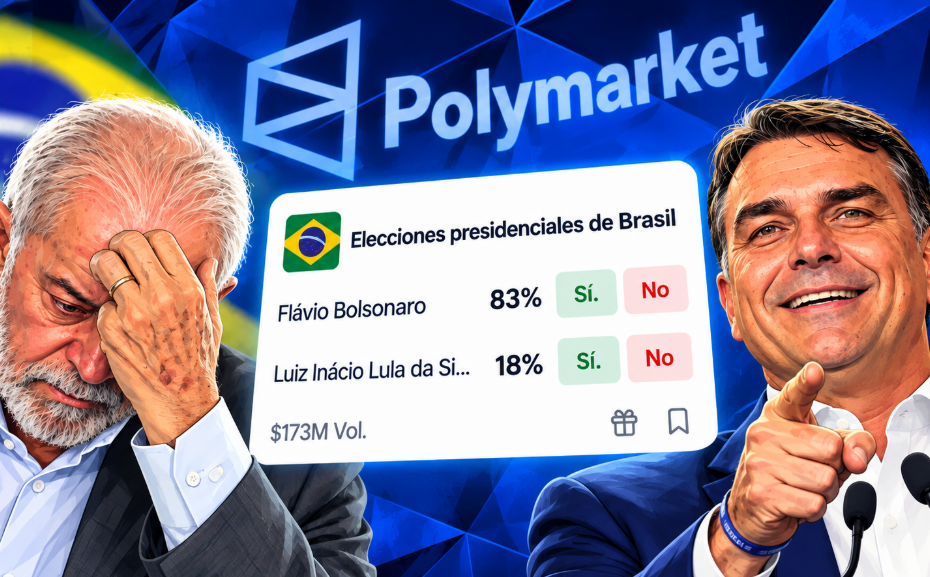













Brazil entered October 5, 2026 with Flávio Bolsonaro and Luiz Inácio Lula da Silva heading toward a runoff on October 25, but Polymarket’s prediction market had already been showing a progressive shift toward Bolsonaro since September. In the October 4 first round, Flávio finished first with 47.03% of the vote, compared with 45.16% for Lula, according to the reported count after election day.
- US$37 million market at Polymarket points to De la Espriella victory in Colombia

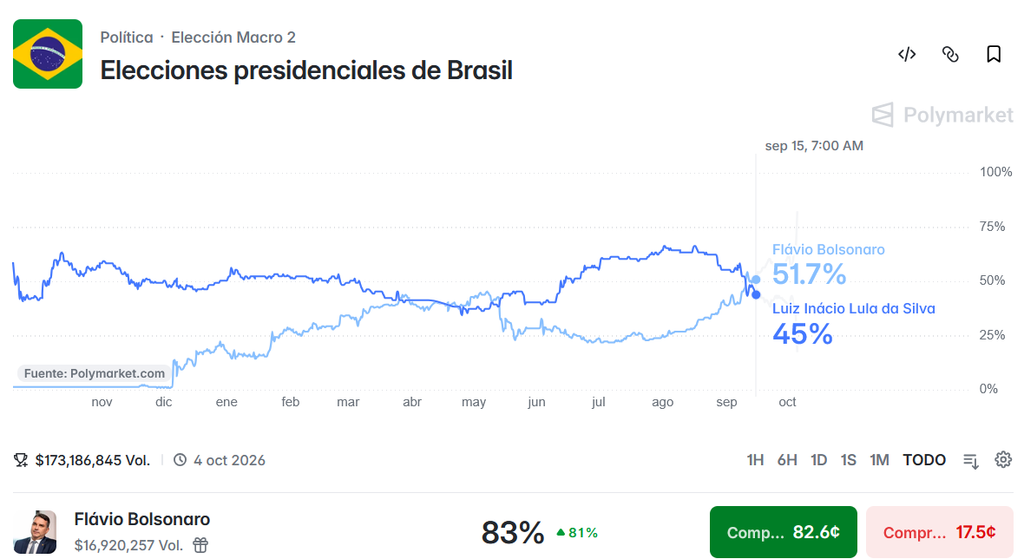
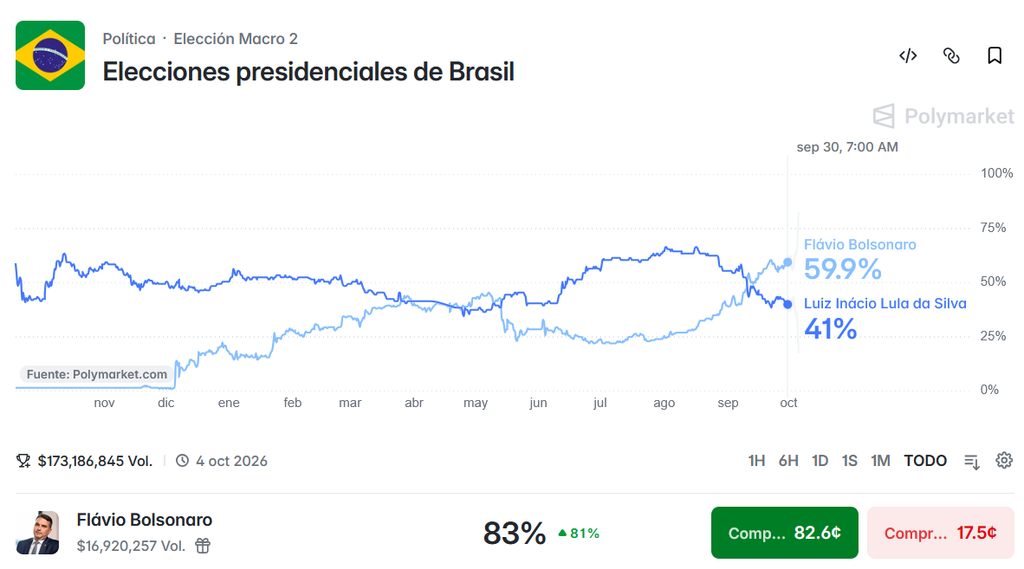
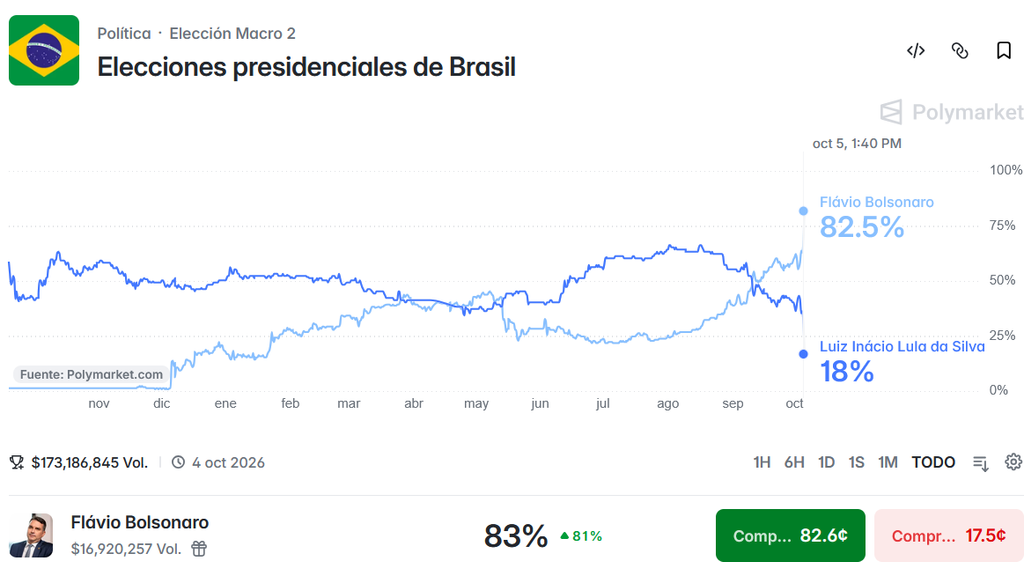
Polymarket’s charts show the speed of the move. On September 1, Lula stood at 56% implied probability versus 39% for Flávio. By September 10, Bolsonaro had moved ahead at 52.4%, compared with 46% for Lula. On September 15, he remained in front at 51.7% versus 45%, and by September 30 the gap had widened to 59.9% against 41%.
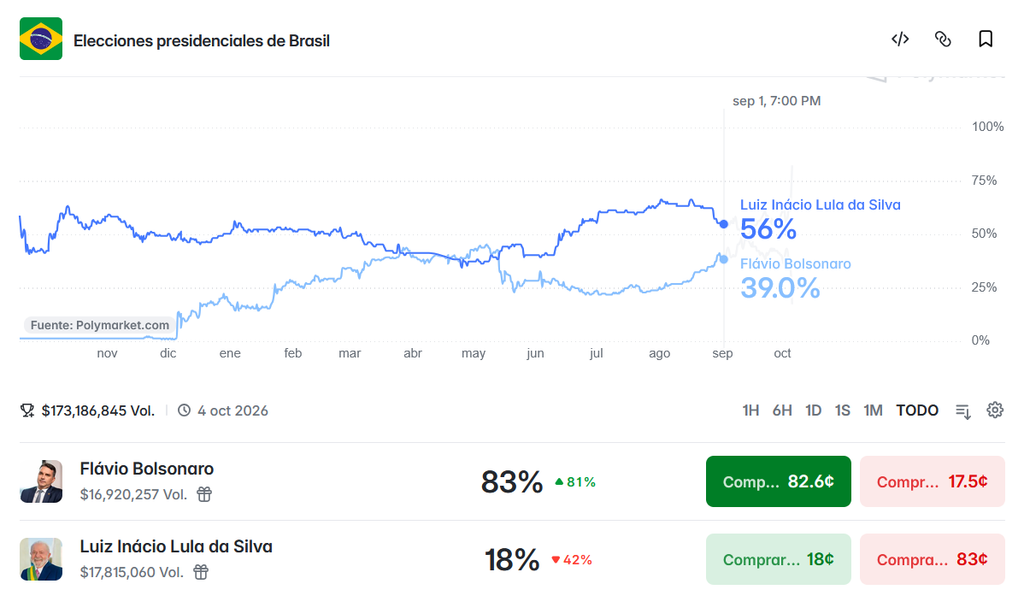

After the October 4 result became known, the move accelerated: on October 5 at 1:40 p.m., the Polymarket chart provided showed Flávio Bolsonaro at 82.5% and Lula at 18%, with approximately US$173.2 million in trading volume. Those percentages represent market prices and implied probabilities, not voting intention or an opinion poll. That distinction is essential: Datafolha and other pollsters had the race much closer before the election, while prediction markets assigned Flávio a wider probability advantage of ultimately winning the presidency.
- Polymarket signals collapse of Colombia’s guerrilla-aligned left
The episode strengthens the argument from supporters of prediction markets who see them as a complementary tool for aggregating dispersed information backed by real money. That does not make them infallible; before the first round, another Polymarket contract had at one stage favored Lula as the winner of that round, and the platform has been blocked in Brazil since April 2026, a factor that can affect liquidity and market representativeness.

The platform also has several high-profile political markets that ultimately resolved correctly. In the 2024 United States presidential election, its market traded US$3.686 billion and settled in favor of Donald Trump. In Colombia’s 2026 presidential election, the market resolved “Yes” for Abelardo de la Espriella within a contract that traded US$44.38 million, after he defeated Iván Cepeda in June. In Portugal, the presidential market traded US$136.47 million and settled in favor of António José Seguro, who won the runoff with 66.83%.