
















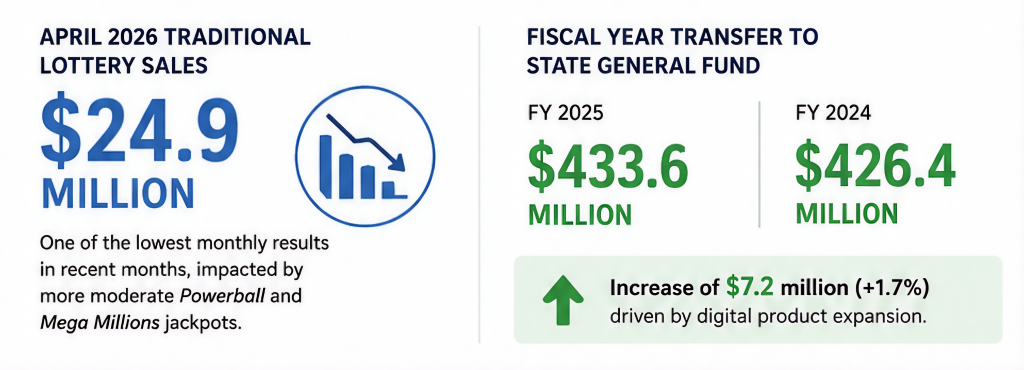
The Rhode Island Lottery reported sales of approximately US$24.7 million in April 2026, marking one of the lowest monthly results in recent months for the state's traditional lottery business and highlighting the ongoing transformation of the market toward digital products, sports betting and iGaming.

This decline was primarily driven by a 13% drop in instant game sales, which fell to US$6.9 million, overshadowing a positive 10% growth in traditional draw games that reached US$5.2 million. The market is overseen by the Rhode Island Lottery, led by Mark Furcolo, which manages traditional lottery products, iLottery, sports betting, video lottery terminals (VLTs), iGaming and oversight of the state's casino operations. The agency's primary mission is to maximize public revenue through regulated gaming activities.
Rhode Island fails to expand sports betting market, IGT monopoly remains until 2026
Despite weaker traditional lottery sales, the broader market continues to deliver positive financial results. During fiscal year 2025, the Rhode Island Lottery transferred US$433.6 million to the state's general fund, compared with US$426.4 million in the previous fiscal year, representing an increase of US$7.2 million largely driven by the expansion of digital gaming products.
The strongest growth came from iGaming, which generated approximately US$45 million in net revenue and reached a handle of nearly US$1.2 billion, while the state's iLottery platform recorded growth of 34.1%. In contrast, sports betting generated US$37.8 million in revenue from a handle of US$472.9 million, representing a 2% year-over-year decline.
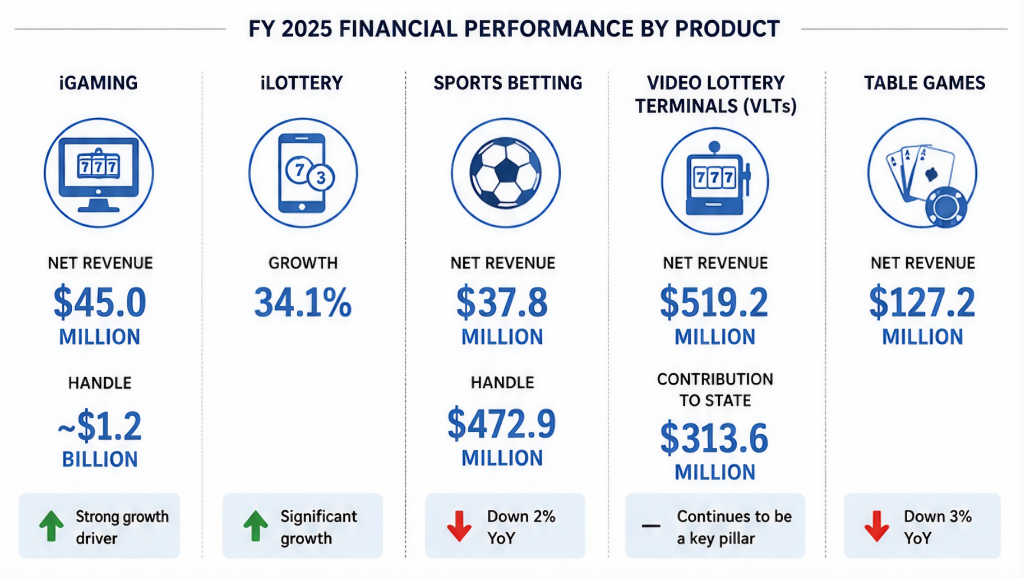

The state's gaming ecosystem continues to rely heavily on Bally's Lincoln Casino Resort and Bally's Tiverton Casino & Hotel, both operated by Bally's Corporation. Video lottery terminals generated US$519.2 million in net revenue and contributed US$313.6 million to state coffers, while table games produced US$127.2 million, down 3% from the previous year.

The market's evolution suggests that Rhode Island is steadily moving toward a model in which traditional lottery products play a smaller role while iGaming, online betting and digital gaming platforms become increasingly important drivers of public revenue. With International Game Technology (IGT) serving as the state's exclusive gaming technology provider through 2043, regulatory and commercial attention is increasingly focused on digital expansion and its ability to sustain long-term fiscal contributions.